
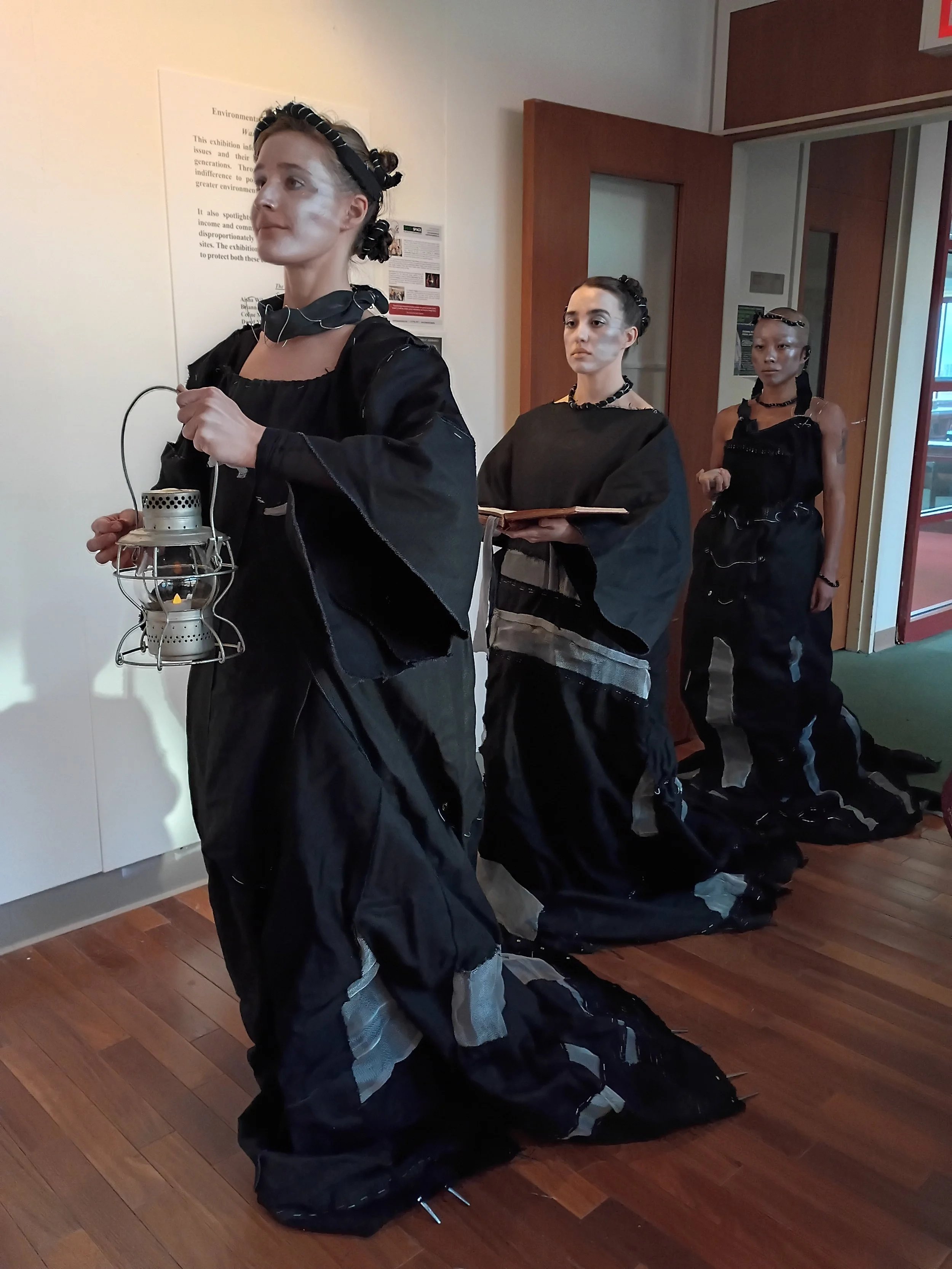
I recently returned to Weapons of Time, a repertory installation work originally premiered in 2005. We had the pleasure of sharing this unique durational performance with an invitation from Arts Transforms to present it at Queens College, Rosenthal Library, Environmental Justice Exhibit on May 8. The work was originally inspirited by a visit to Turkey and experiencing the whirling dervishes. It is loosely held by an excerpt from Gwendolyn Brooks’ “Weaponed Women” (1963)—a woman moving through a baffling world, fighting “according to her lights.”
At the same time, I had a vision of handcrafted costumes from metal, and cloth with dancers on three-foot platforms, turning slowly. I built each figures costume on the original dancers and myself many years ago. The work was born from these inspirations and unfolded into include three objects: a stone, a lantern, and a book. They are simple. Archetypal. Timeless. And yet, they carry weight.
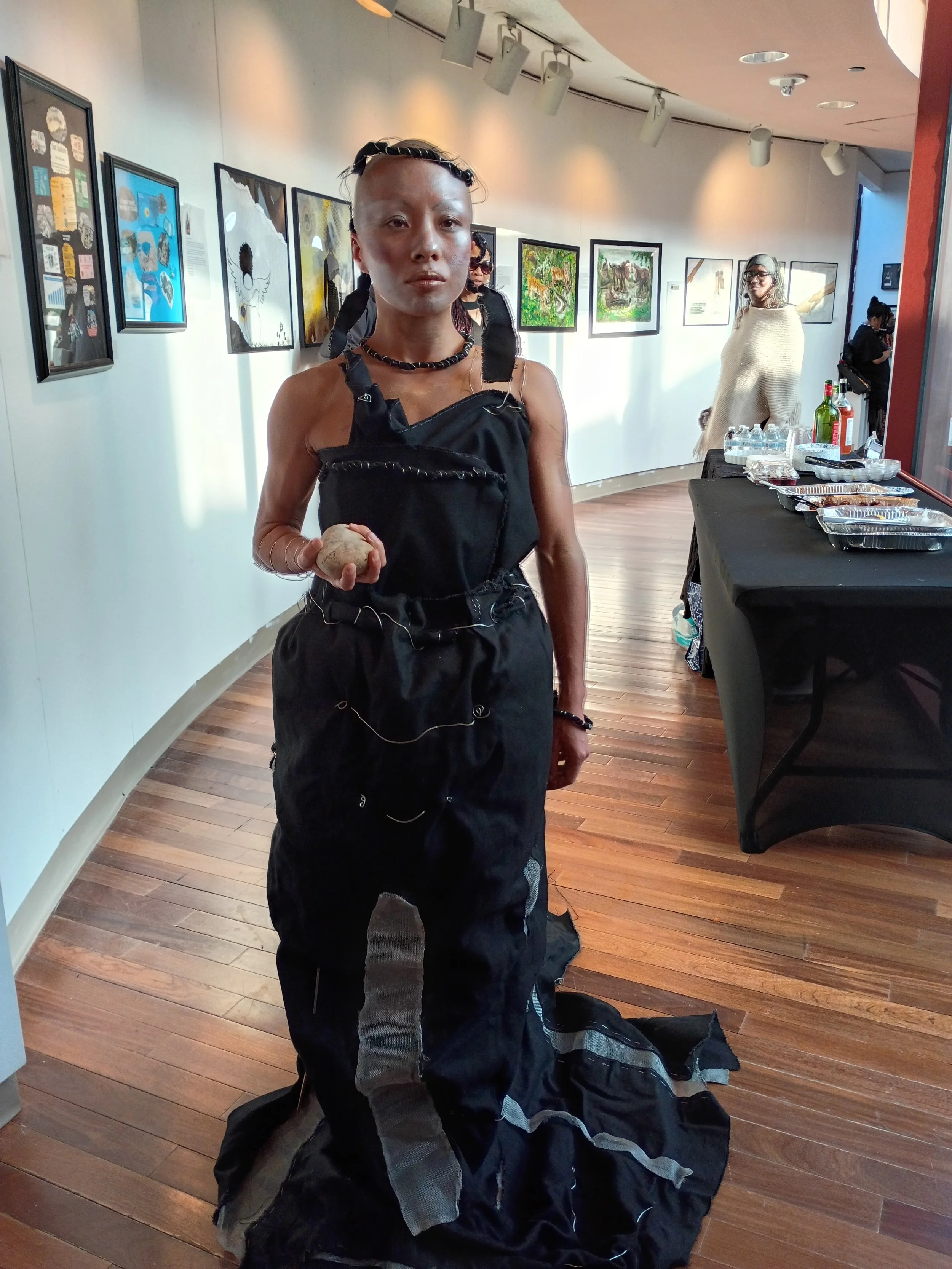
The Stone — Protection
The stone is the oldest of the three. It holds something ancient, something that predates language. Stones have always been tools—used to build, to defend, to survive. They’ve been shaped into weapons, into shelter, into fire. They are both grounding and unyielding. There is something about holding a stone that immediately connects the body to time, to history, to something beyond the personal. But protection is not neutral. The same object that builds can also destroy. Stones have been used to fortify civilizations—and to end lives. There is a collective anonymity in violence when it becomes shared, dispersed. No single hand, and yet harm is done.
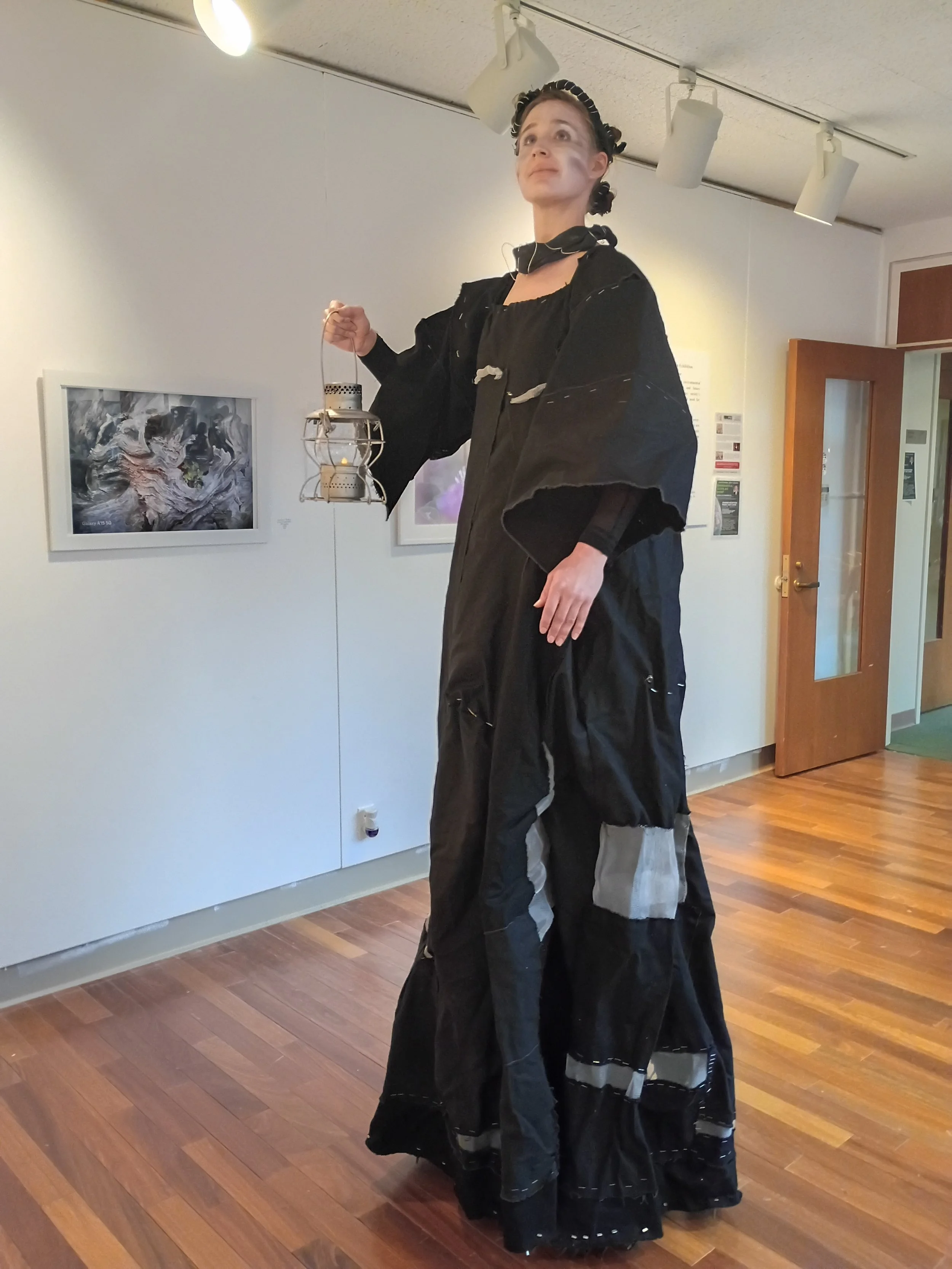
The Lantern — Light
The lantern introduces light—not just as illumination, but as exposure. Light allows us to see. It reveals what is hidden, what is obscured, what we might not be ready to face. There is a comfort in light, but also a vulnerability. To be seen is not always easy. Light carries a long symbolic lineage—truth, goodness, clarity. It is often positioned against darkness, as if one cancels out the other. But I’m less interested in that binary and more interested in the tension between them. Light doesn’t just reveal the world—it reveals us to ourselves. And sometimes that is the harder task.
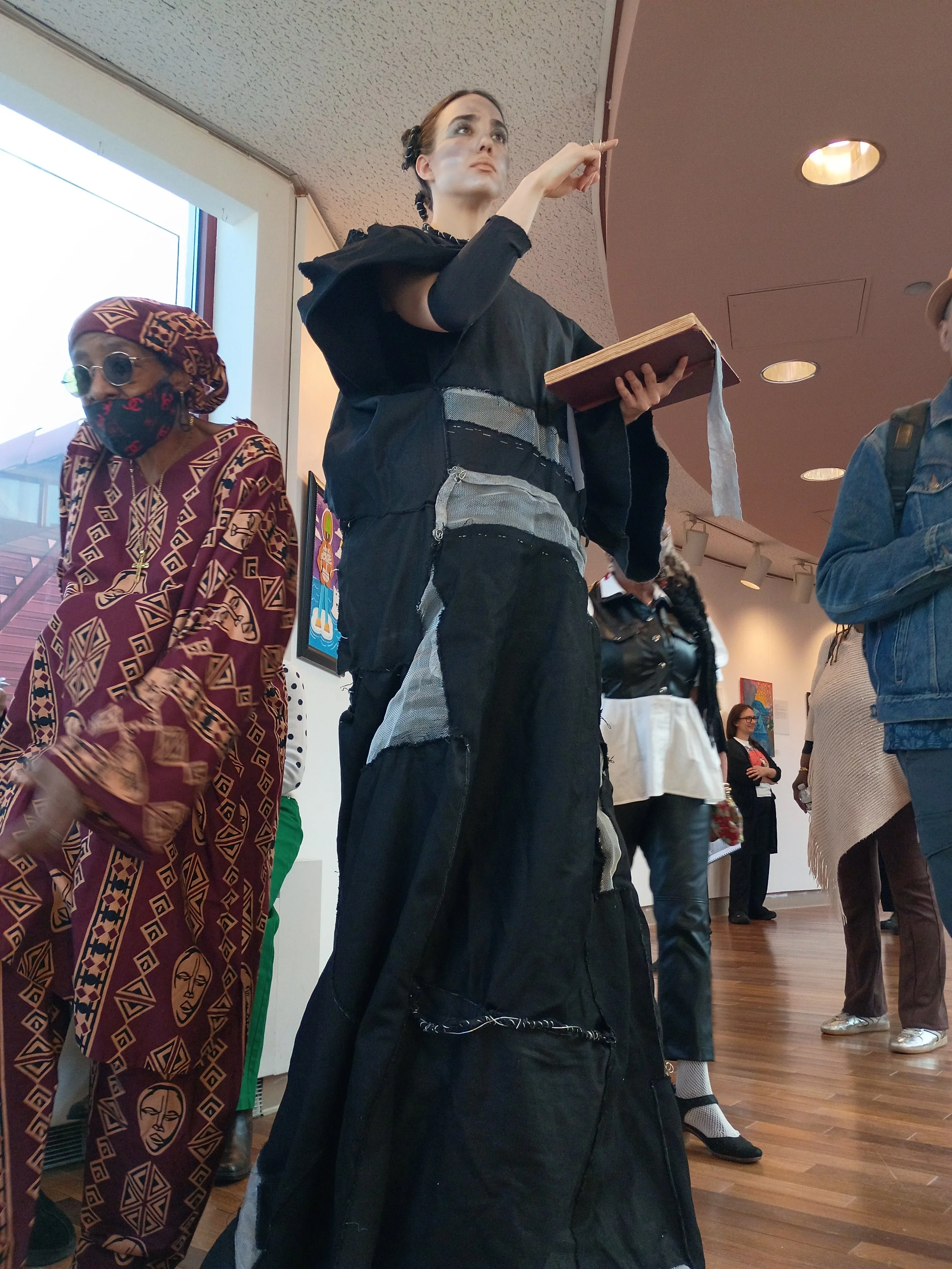
The Book — Knowledge
The book is perhaps the most complicated of the three. Knowledge is often framed as power—and it is. But power is never singular in its direction Knowledge can liberate, but it can also control. It can open, and it can close. It can be shared with intention, or wielded without care.
Weapons of Time is not about weapons in the literal sense. It’s about what we carry—consciously or unconsciously—as we move through the world. Protection. Light. Knowledge. Each can serve. Each can harm. Each shifts, depending on context, intention, and awareness. The work doesn’t try to resolve that. It sits inside it. The work invites viewers to contemplate these figures, objects, and ideas and what they stand for. And perhaps even reflect them in relationship to ourselves…..What are the tools we’ve inherited? What are we choosing to use? And what are they doing—to us, and through us—over time?
- Valerie Green